Note: This is another case in which the blog isn’t really intentional per se. Over the years of my spiritual journey, I have tried to include daily Bible reading as part of my regimen. Now, I’ll be honest… sometimes I do well in terms of Bible reading (if we think of it solely as a checklist item), but other seasons see me going months without picking up the Bible. That has been my experience for decades. And to be totally transparent, daily Bible reading became much more challenging after I retired from professional pulpit preaching. I share that because this isn’t meant to be a point of condemnation for anyone who might be reading this today. Having said that, when I do read, I usually jot down any random thoughts that I have along the way. Because I am using this forum as an online journal, I have decided to collect and collate these random entries into blogs for my future reference. I am currently reading through Mark and just finished chapter 1. It took me roughly a month+ given my pace. I usually read the chapter through in its entirety and then I go back and more slowly read a specific passage, meditating on the impact along the way. At any rate…
[For those who are curious I generally use a New American Standard for my personal reading. The only reason is because that is the translation that I first started using when I was in my 20s. It is the one I am comfortable with still to this day. I added a few pictures to break up the large body of type :)]
Thoughts from Mark 1:
- It is worth noting that the entire book begins with a simple proclamation… “Jesus Christ, the Son of God”. From the very beginning His divinity is declared as the foundation stone upon which the gospel will be built. Not just a man. But God in human flesh.
- As is so often seen throughout the Bible, many stories begin with a time of extended isolation as one is prepared for kingdom service in (and by) the wilderness. Alone with God. Stripped of all earthly comforts. Entirely dependent upon God for provision. That is the way of preparation for those who would serve. That is the place wherein one hears the voice of God.
- The humility of a servant… John recognized the immense gulf that existed between him and Jesus. And with that knowledge he walked in humility. I am neither mighty nor worthy. It is He alone that is mighty and worthy.
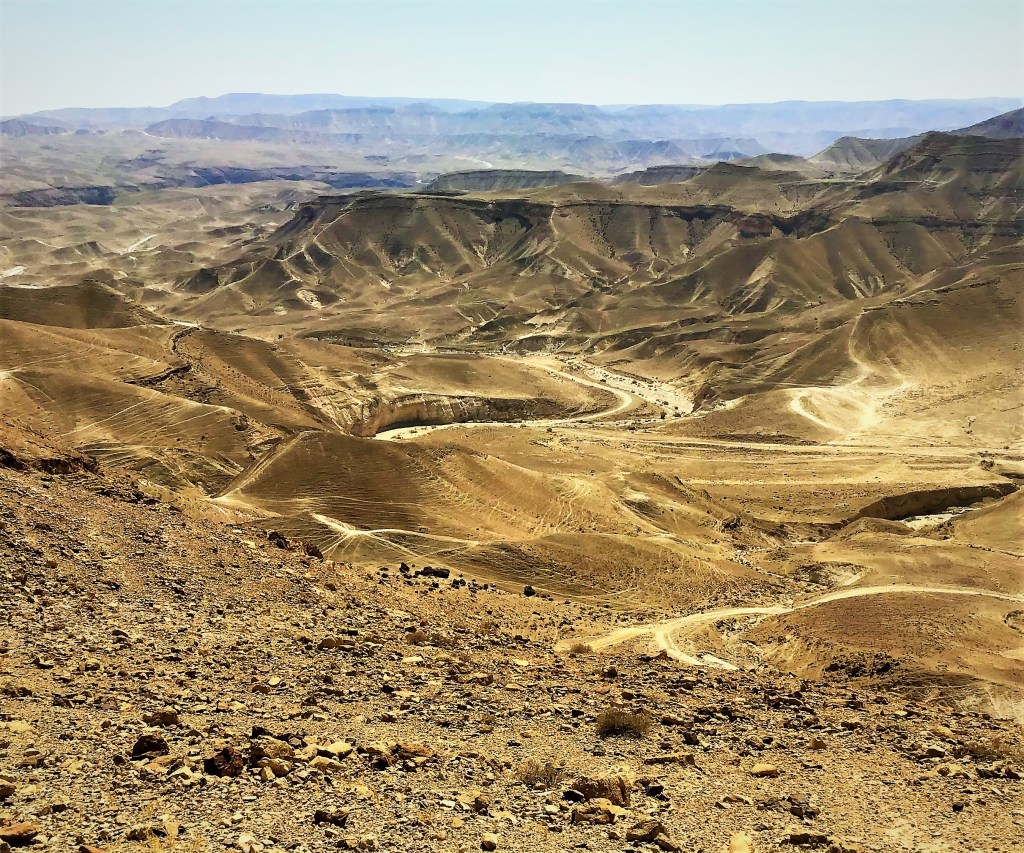
- Prepare and straighten. That was the process and the directive. Inherent in this wilderness call was the need for repentance, confession, and baptism (change the way one thinks, acknowledge the error of one’s ways, and publicly renounce the old and embrace the new). At its essence, the wilderness call was a call to “CHANGE.” Not just a time of isolation but a process intended to produce change in the participant. Go in one way and come out another way… i.e., different and more better aligned with the nature and character of God. The result was forgiveness and Spirit baptism (enablement and empowerment).
- Even the sinless Son of God was required to enter the wilderness. The difference in this case was one of purpose. For us it is a time of encounter designed to catalyze change. For our Savior it was a time of identification. He would face and defeat temptation as our Substitute. So, at a high level, this was a difference of both like and kind. Nonetheless, it highlights the important role of the wilderness in the life of the believer. It cannot be avoided or bypassed. Therein we face testing in order that we might be refined and perfected (i.e., prepared) for the call and attendant tasks that are before us.
- As an overarching thought… Am I fully utilizing/maximizing the wilderness seasons of my life? Isolation means nothing if I am not allowing the process to have its full impact. Change is the goal. Transformation is the target. It is easy to claim I am “spending time alone with God” (reading the Bible, prayer, etc.). But am I walking forth from those times have been challenged and changed? The caterpillar cannot forever remain a caterpillar. The purpose of going into the cocoon is to begin the process of transformation in order to become something new and different. No longer who or what I was, but someone more like Christ.
- “The time is fulfilled…” That short phrase reminds me of Ecclesiastes 3:1, “There is an appointed time for everything. And there is a time for every matter under heaven – ” The idea in this specific context is that the time is now completed, achieved, satisfied; i.e., the time is at hand and has arrived. The long years of waiting have come to an end. The One who was promised is here. Expectation and anticipation have found their consummation. Speaking for myself, there may well be no harder or more challenging aspect of faith than the “waiting.” For example, God has given a promise, a word in season that I believe is specific to my life. But then a time of prolonged waiting immediately follows. In some cases it can span years or even a lifetime. (Think of all the generations that were born and passed awaiting the promise of the coming Messiah.) And yet, it is clear that in time, at the proper time according to God’s providential plan, the “time will be fulfilled.” God is not a man that He should lie. Every word will be fulfilled. Every promise will be honored. For my part all I can do is patiently wait and continue to trust Him, walking forward in faith and obedience. Then, when that moment of realization comes to fulfillment, act upon it.
- “…left their nets… left their Father…” All 4 men, when called, had to make a choice. In order to move forward something had to be left behind. The call to discipleship demanded a break with the past. In order to “become” they had to separate from what they had been. For 2 of them the choice required the sacrifice of their occupation. For the other two the decision meant a stark separation from family. I think that the issue here is not the actual thing each group left behind, but rather, the overarching principle of sacrificial service as the prelude to committed discipleship. For each of us that specific obstacle(s) will most likely be different. If we would move forward with Christ, we must leave behind every weight and impediment. Hebrews 12:1 states it perfectly, “Therefore, since we also have such a great cloud of witnesses surrounding us, let’s rid ourselves of every obstacle and the sin which so easily entangles us, and let’s run with endurance the race that is set before us,…”

- “…and she served them.” A simple and straightforward response to the grace of God in her life. Jesus went to her, raised her up, and she was healed. And as a response to the miraculous grace she had received, she served those in her immediate sphere of influence. Far too often I look for “marvelous” and “magnificent” ways of expressing my gratitude. In truth that desire has much more to do with a deep-seated desire for recognition and applause (i.e., the love of the “spotlight”) than any true sense of gratitude for the grace of God in my life. In reality true gratitude is based in humility. It is the understanding that service begins in the place where one has been placed by God. By serving others I am serving Him. Along those lines it is worth noting that amidst all of the names listed in this passage she remains anonymous, known only by her title relative to Peter (i.e., “mother-in-law”). God, work in me such a heart, one that responds to Your grace by quietly and selflessly serving You by serving others.
- “…and went away to a secluded place, and prayed there for a time.” The sinless Son of God still made time for secluded prayer. That statement alone should suffice as a note to those of us that follow Him. Time alone with God is the foundation of our spiritual life.
- “Moved with compassion…” That’s it. Are we truly compassionate? If so, we will be moved to act. Notice the progression. First came the physical response. Words were last in the order. And personal commands were at the very end of that progression. Jesus heard the request and reacted in love. Such is our example. Such is our mandate.
- “If You are willing, You can…” To be honest, that has been at the heart of my struggles over the years of my Christian journey. I don’t doubt God’s ability as much as I question His willingness (or perhaps I should say I am uncertain of His will). Faith is not Aladdin’s lamp. We don’t pray and receive our wishes granted instantly. [God is not beholden to our longings and wants.] Sometimes, to be honest, it seems and feels like absolutely nothing happens; almost as if God isn’t willing in this specific situation. Hence, the need for trust and faith. The struggle is real, trying to hold to God’s faithfulness when it seems that He is unwilling to respond to my need and grant my desire. But according to the grace He alone can give, I will try my best to keep moving forward. Hoping (trusting) that He is willing. And believing that He can. All I can say is to echo the words of the father in Mark 9, “I do believe; help my unbelief!”

 Be The Change 180
Leave a comment